

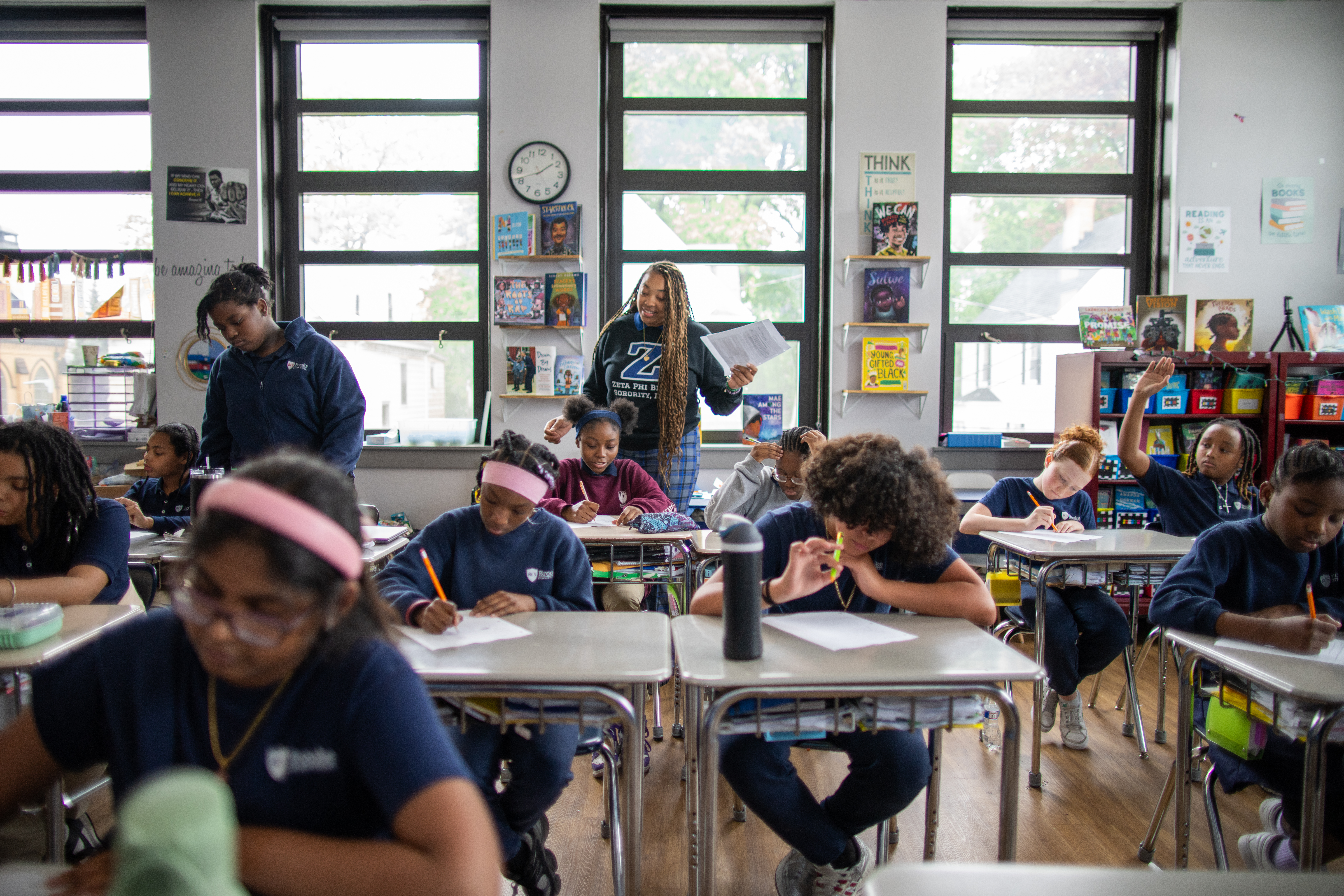
Where High Expectations Meet Joy: Inside Ms. Gibson’s Classroom

For nearly a decade, Ms. Gibson has grown alongside Brooke, beginning her journey as an Associate Teacher ‘16 and now leading an 8th-grade ELA classroom while mentoring Associate Teachers. What started as a passion for teaching and supporting young people has evolved into a career rooted in patience, authenticity, and continuous growth.
“She has taught me to keep going even when I mess up or don’t understand things, I can take my time and think about it before I put it down on my paper,” is how one student described the impact Ms. Gibson has had on her learning.
Ms. Gibson reflects on experiences like these and how Brooke’s culture of coaching, professional development, and high expectations has shaped her practice. Her story is a powerful example of what’s possible at Brooke: a place where educators are supported to grow, lead, and bring their full selves to the work, while making a lasting difference in the lives of students.
What brought you to Brooke originally, and what has kept you here since 2016?
What originally brought me to Brooke was my desire to get into teaching. Before Brooke, I was a first-time mom working in a lab, and my hours were all over the place.
I had already been involved in education throughout college, I worked as a mentor, so that’s where I really developed my passion for helping future generations.
How has your teaching evolved from your time as an Associate Teacher to now leading an 8th grade ELA classroom and a mentor teacher?
I’m much more intentional about making sure I’m teaching students not just content, but also the skills they need to be successful.
As a mentor teacher, you’re helping someone else develop their skills, and that doesn’t happen overnight. This is my 10th year here, so I understand that growth takes time. New teachers often want to see progress immediately, and part of my role is helping them understand that patience is necessary to be successful.
How do you define “great teaching,” and how does that show up in your classroom day-to-day?
Great teaching is knowing your content well, but also bringing authenticity to it. You can’t be a great teacher if students don’t feel connected to you. They need someone who’s authentic so they can be themselves, grow into who they are, and engage meaningfully with the work.
Brooke focuses heavily on practice, coaching, and continuous improvement – which part of that approach resonates most with you?
Continuous improvement resonates with me the most. No one is perfect, and I don’t think anyone should believe they are. Even as adults, we should always be willing to learn and grow. That mindset is really important to me.
I really appreciate instructional leaders coming in to observe and then having debriefs afterward. Without those conversations, I wouldn’t always see the areas where I still need to grow. Even now, I’m always looking for ways to continue developing myself, and that feedback really supports that.
What role has professional development contributed to your teaching practices?
Lately, we’ve been doing a lot of Science of Reading professional development. That’s helped me support my learners by breaking down content and strengthening their understanding of spelling, literacy, reading, and writing.
We’ve always had PD every Wednesday with a half day schedule. Before, we had more grade-level PD across the network, but now it’s grouped by content with all ELA teachers together.. It helps us see how learning connects across the school and grade levels.
What helps your students thrive in ELA at this stage in their academic journey?
Habits are the biggest thing. Without strong habits, students aren’t successful. At this age, students tend to rush through work because they just want to be done. They want good grades, but they don’t always want to do the small things to get there. I focus on the process, I care more about how they got to the outcome than the final score itself.
I also like lessons that get students thinking on a larger scale and allow them to connect the content to their daily lives. When students can see themselves in a text or relate it to their family or experiences, they’re more engaged.
Can you highlight a moment when you saw your teaching have a direct impact on student learning or confidence?
During my first year as a lead teacher, I had a student whose mom often said he couldn’t read or succeed. He had been through many schools and constantly heard that he “couldn’t.” I kept telling him that he could. Before leaving Brooke, he wrote me a note thanking me for helping him believe in himself. That moment reminded me why I’m here.
You also help lead cultural initiatives at Brooke Roslindale. How has that contributed to why you’ve stayed at Brooke?
I want students to experience things they might not otherwise have access to—seeing musicians, poets, drummers, singers, and even politicians come into their school. I want them to see themselves reflected in those people and think, “That’s something I can do too.” Creating those experiences is deeply meaningful to me.
What brings you the most joy about teaching at Brooke Roslindale?
I’m able to push my freedom of mind here. My ideas are valued, and I’m encouraged to try new things. When I say, “I want to try this,” I’m given the green light. That trust and support bring me a lot of joy.
Joy and high expectations go hand in hand in my classroom. We’re going to have fun, but we’re also going to meet expectations and reach goals—because students can do both.