

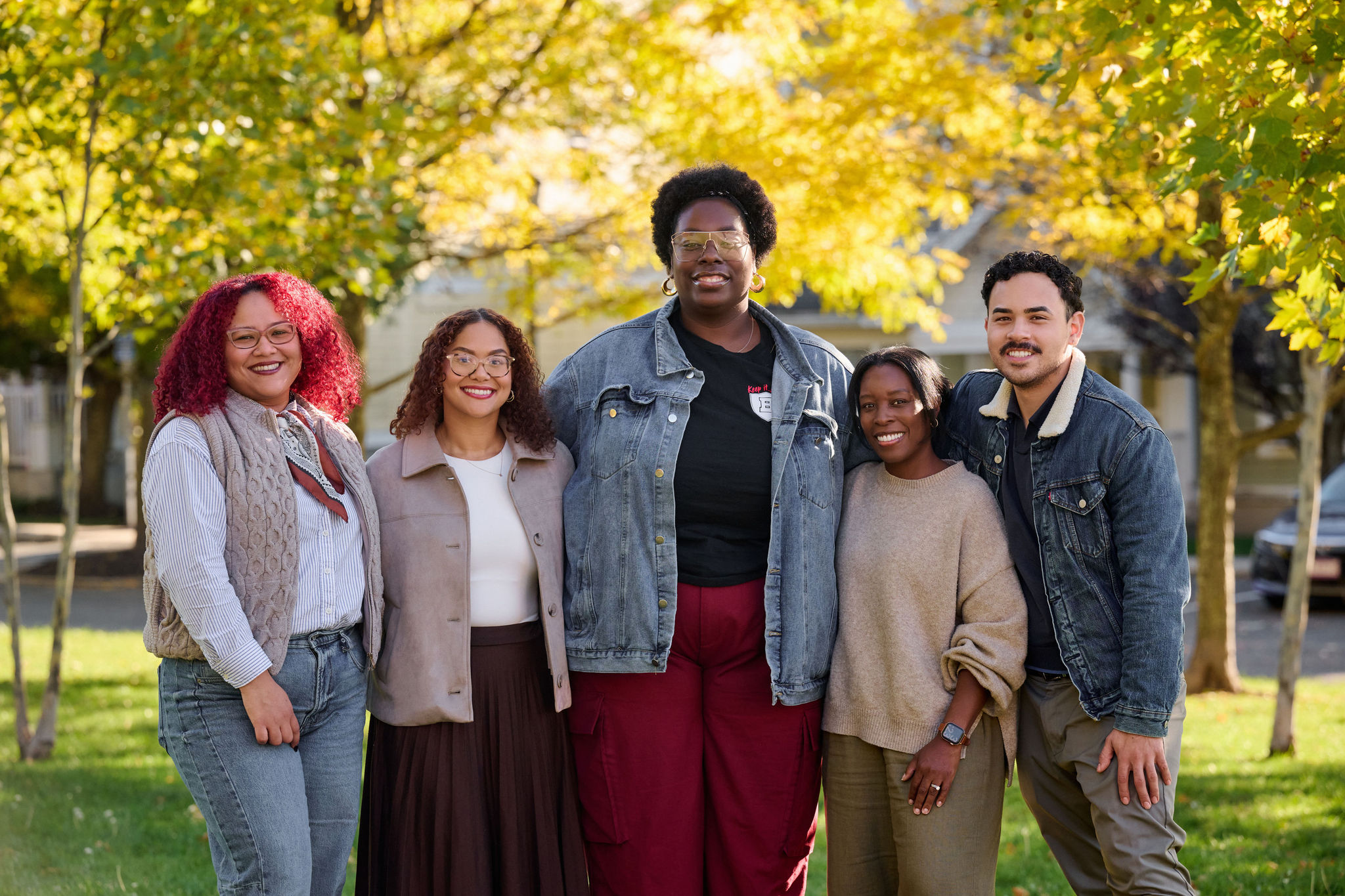
The People Behind the Path: Meet Brooke’s College Counseling and Alumni Support Team

For Brooke’s college counseling and alumni support team, helping students navigate life after high school is personal. Cindy, Angel, JC, Paige, and Carolin each worked their way through college without a clear roadmap.
Cindy’s family expected her to go but never explained how, so she became the advocate she never had.
Angel figured it out alone with few resources and now builds support for students who might feel the same way.
JC met his counselor once and arrived at college barely knowing the system, which pushed him to make big transitions feel manageable, one small step at a time.
Paige’s struggle to find financial guidance led her to counseling, and Carolin, who came from the DR at 14 speaking no English, now offers students the trusted support she wished she could have had.
Today, those experiences shape how they help Brooke students advocate for themselves, break big decisions into manageable steps, and know they’re not alone.
What is one thing you do for our current students that would have helped you succeed at their age?
JC: Just having regular, structured meetings. I did not have that in high school at all. If I had that level of support, it would have made such a difference.
Angel: Having someone who is there to be your cheerleader. Just having someone who can tell our students, “You got this. You can do this. I believe in you,” goes a long way.
Carolin: Letting them know that you can’t cut yourself out before you even give yourself a chance to consider your options.
Cindy: For me, I think it’d be someone whose only buy-in is in my future and my success. To have someone external that only knows me, that only cares about my happiness.
What do you hope students experience when they work with you?
JC: I hope that they feel that it’s manageable and that they feel like there are concrete steps that they’re able to take.
Paige: I hope they feel supported and like they have an extra person on their team.
Carolin: I want them to know it is possible. There are a lot of things that can clutter that vision of attaining that goal, but it is possible, and you can do it too.
Cindy: I hope that they know that it’s their journey, and that we are a sounding board. We’re just here to walk alongside them. Our job is to have their best interests at heart. That is what we do. That is the core of this work.
How do you help students take ownership of their post-secondary journeys?
Angel: A big part of this year has been about us holding our students accountable. We have to build accountability structures so that students are aware of how to gain the skills of doing this work and of being advocates of their journey.
Cindy: We will push you because everyone here believes in greatness in you. We will do everything we can to make you believe in your own greatness, whether that be harsh, real conversations or whether that be really soft, kind ones.
Carolin: Students should know that yes, we got you, but I actually want to take the training wheels off at some point. There is a skill and a confidence that is built from being able to solve a problem, no matter how big or small.
Paige: We’re here to support and help them, but we’re teaching them how to connect all the pieces on their own too.
What role do families play in the college process?
Cindy: I’d almost challenge that and say, well, what role don’t families play in the college process?
Even on the alumni side of this team, I only meet with students. I don’t necessarily meet with families, but families are in the behind-the-scenes of every decision and every thought. They’re in every single factor of every single thing and every single decision and conversation we have, for sure.
Carolin: Our students are 17, 18 and they cannot reach that next step without family support a lot of times. Before we even meet the students, we already had a conversation with the parents, letting them know that we are an ally. Yes, our goal is to support the student, but we’re also here to support you. What kind of support do you need from us? Where can we step in? It has to be a collective experience. Otherwise, students are on one page, their parents are on another page, and if you don’t bridge that gap and have everybody’s goals aligned, then the process is really hard for everybody, including the student.
What does collaboration look like between your team and staff?
Paige: Off the bat, trust. I think that has been a very foundational thing in this team. As for the teachers, I think it’s a lot of communication and letting them know that we’re here to support the students as well. We are a part of their team as well, so we have to work together.
Carolin: During the spring of their junior year, the college team partners with teachers to review students’ personal statements. Teachers welcome us into their classrooms, where we meet with students one-on-one to discuss their statements and offer peer-to-peer feedback.
Cindy: We are fortunate enough to leverage relationships with teachers, and those relationships work in both directions. Staff contact us when they’ve referred a student, whether to flag a concern, celebrate an achievement, or ask for support. I also reach out to teachers when I want updates or context about an alum.
What has surprised you or stood out about the Brooke community?
Cindy: My biggest surprise, in a great way, is how often “yes” is said. We all invest in our students, but seeing emotional investment, physical investment, time investment, continuously and consistently is really unique in a school environment like ours.
Paige: How genuine the connection is here between the teachers and the students and the staff. It is so genuine and comes from a place of really knowing the people who they’re here with every day.
Carolin: The students’ love runs deep. Once they’re on your side, years could pass by and they’re always going to remember that and come back to that.
JC: For me, stepping into this community and seeing so many Black and brown students be so empowered to do their best work and really aspire for something more – I think that’s very powerful.