

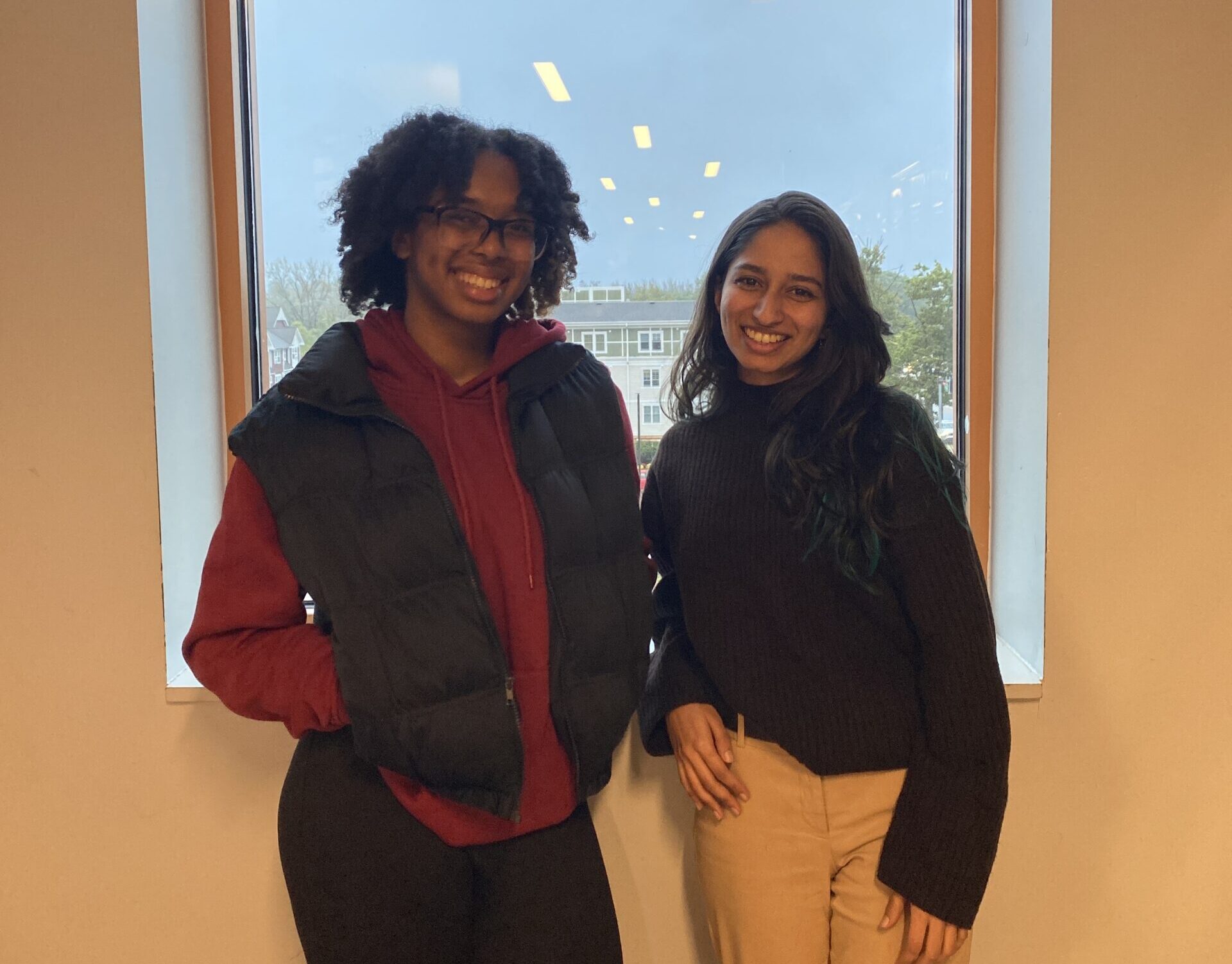
From Associate to Lead: One Teacher’s Journey at Brooke

Starting out as an Associate Teacher is an opportunity at Brooke to learn, observe, and build confidence before leading a classroom of your own. For Aditi, that year of training in 2023 laid the foundation for her transition into teaching high school physics and medical interventions. Now in her second year as a lead teacher, she reflects on how her Associate Teacher experience shaped her practice, the lessons she’s carrying forward, and the support that continues to anchor her at Brooke.
Her impact on students is clear. As one student shared:
“The impact Ms. Marshan has had on me both academically and personally is irreplaceable. Being a student in her class, she showed me that she cares for me and all her students to succeed and have the proper material needed for us to learn to the highest extent possible. Ms. Marshan is one of those teachers where I can go to and talk about almost anything. She makes her class a safe and comforting space… she’s always been a big support who tries her hardest for her students and is very understanding, and for that I’m truly so grateful.”
Kendall Boyd, Class of 2026
How did your experience as an Associate Teacher prepare you for your first year as a lead teacher?
Watching others teach helped me see how students respond to different expectations, gather strategies that work across situations, and build relationships. Staying at the high school as a lead teacher made this even more valuable, since students already knew and trusted me.
What skills or habits from your AT year have been the most valuable to you now?
The most valuable skill from my AT year is having clear routines around classroom management. For example, setting clear routines at the start of class, such as how we get materials, turn them in, and put things away, helps prevent chaos. Once those procedures were solid, I could focus more on the academics.
What was the most valuable feedback you received as an AT?
I think as an AT, and even a little now, I’ve struggled with issuing consequences, like actually giving detentions when expectations aren’t met. But what I was told repeatedly, and what I eventually started to see, is that not holding kids to high expectations and not pairing that with consequences is actually doing them more harm than good. In a way, it’s unkind not to expect them to do well.
What was the biggest adjustment moving from AT to lead teacher?
It was an adjustment in both a good way and a kind of hard way having to write my own curriculum. As an AT, you just get a lesson plan and try your best to teach it, which means less work on the back end. But it’s harder to teach something you didn’t write yourself because you don’t know the material as well. So it was definitely a challenge to do all of that thinking and prep work.
How did your mentor or other colleagues support you during your first year leading a classroom?
My assistant principal, Adam, is awesome. He’s great at noticing things you wouldn’t catch yourself and delivering that feedback in a way that’s actionable. The veteran science teachers were also amazing for moral support. And specifically, Ms. King, she also teaches the class I do, and has everything mapped out. She did a lot of the heavy lifting, and I could rely on her.
How do you balance holding high expectations for students while building strong relationships with them?
I think they’re the same thing. You cannot do one without the other. Your relationship to the student is a teacher. Without holding them to a high expectation, you cannot teach them something. But also, you cannot effectively teach them unless you know their struggles, what they’re really great at, and what they’re interested in. Like knowing which of my kids play basketball versus soccer helps me know which unit to call them up in, like using sports examples in physics problems.
Was there a moment last year where you felt your AT training in action?
I think of more than one situation—it’s every one-on-one interaction I’ve had with a student. Whether they’re doing really well and I want to call them out for that, or they’re struggling with something and I want to address why that’s happening. A lot of the readings we did as ATs helped with that, but also getting to watch teachers actually pull a child aside—like noticing what moment in the class they’re doing that, how they’re doing it so no one else can hear, and the things that are being said. Being able to check in with them after I definitely came back when I was in those situations.
What drew you to Brooke initially and what has kept you here?
What drew me was the ethos of knowing and challenging your kids. That balance seemed so difficult at the start, but I started to figure it out. What’s kept me here is the structures of support. I have not once felt like I was alone in anything. There’s always someone I can go to for any kind of situation.
What advice would you give to this year’s Associate Teachers?
The biggest advice is to watch as many classes as you can. You’ll be told to watch great teachers, and you want to watch as many people and different departments as possible. I stuck to science, but I think I would have gained a lot from watching math classes as an AT.
What are you most proud of from your first year of lead teaching?
I am proud of building and executing a curriculum from the ground up, reflecting on the data from it, and making changes I needed for this year.
What are you most looking forward to in your second year of lead teaching?
So much! I changed a lot of things about my curriculum based on what went well and what didn’t. I had the experience of running things once already, and now, everything feels smoother, faster, and more intuitive. I just gave my first test, and the data looks so much better than last year’s.